Internships & Fieldwork
Both undergraduate and graduate social work students complete extensive fieldwork to refine their professional skills and integrate classroom learning with real-world practice. Field placements immerse you in agency settings where you engage in supervised social work and gain hands-on experience. These opportunities help you build the competencies needed for successful careers in policy and politics, advocacy, health centers and community-based organizations.
Hands-On Fieldwork that Builds Professional Skills
Social work majors complete a year-long practicum under professional supervision, including at least 450 hours of supervised field experience. Students are placed at agencies across New York state and beyond. Locally, placements have included Behavioral Health Services North, Champlain Valley Family Center, CVPH, and on campus with TRIO/Student Support Services, Sibley Childcare Center and the TBI Center.
Graduate students complete a minimum of 950 hours of fieldwork, with 450 hours during the first year and 500 hours during the second. Placements are tailored to individual career goals and span a broad range of settings, including policy and political advocacy, health centers and community-based organizations.
Placement Opportunities
Locally, you are able to be placed in a variety of organizations and agencies. You will gain experience in:
- School social work
- Healthcare and medical social work
- Child welfare
- Community and advocacy
- Criminal justice
- Victim’s advocacy
- Unhoused
- Mental health
- Children’s issues
- Substance use
- Traumatic brain injury (TBI)
- Intellectual and developmental disabilities
- Interpersonal violence
- Skilled nursing facilities
- Gerontological (aging) services
Internship Profiles
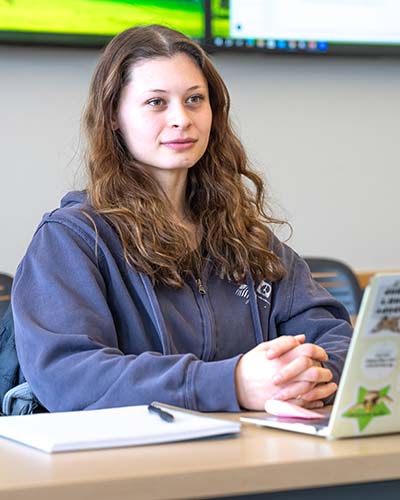 Cassidy Harvey, M.S.W. Class of ’25
“Interning at Hope House prepared me to work in the profession in so many ways. I was exposed to a large variety of people, as addiction can impact anyone, and this helped me reflect on my own privilege and practice cultural humility. Additionally, this placement provided me practice working with an interdisciplinary team — many clients receive other services (mental health providers in the community, lawyers, CPS, family support, etc.) and interfacing with multiple systems and providers helped me understand how to coordinate complex care. I also feel as though my documentation has improved. I have learned how to write clear and concise notes that explain client progress through treatment.
“I have had many valuable learning opportunities and have also become more familiar with resources in the community. I was able to try a little bit of everything during my internship at Hope House. My supervisor was very communicative and easily accessible. I feel more comfortable entering the workforce having been exposed to a variety of different social work opportunities.”
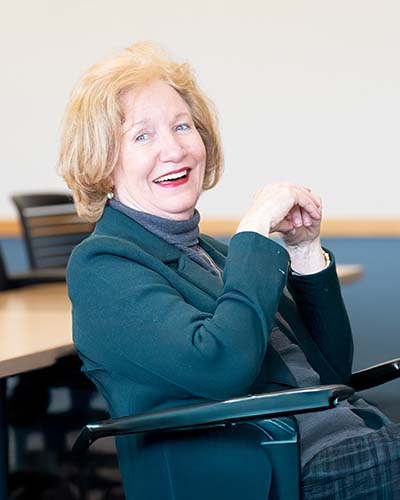 Marlene Countermine, M.S.W. Class of ’25
“My internship at the Glens Falls Center of Excellence for Alzheimer’s Disease (CEAD) provided me with a wealth of hands-on experience and valuable mentorship. Each day I learned something new about the program, the population served — including family members impacted by Alzheimer’s Disease — and how to work with clients and their caregivers. I discovered the importance of person-centered care, empowering clients and caregivers, while also providing psychoeducation and connection to resources.
“I learned the art of applying and tailoring techniques, including adjusting verbal and nonverbal communication to foster trust and help clients and caregivers feel comfortable and heard. These are things you can learn from books, but the real knowledge comes from the “on-the-job” training.
“My supervisor modeled patience, showed me how valuable open-ended questions are, the importance of silence to foster a secure holding space for clients and caregivers to express their needs and concerns, and so much more. My internship experience not only enhanced my skills and knowledge, but it also gave me the self-confidence I will need to continue my work as a social worker, hopefully in the field of bereavement.”