Narcan Training Arms Campus Community with Tools to Save Lives
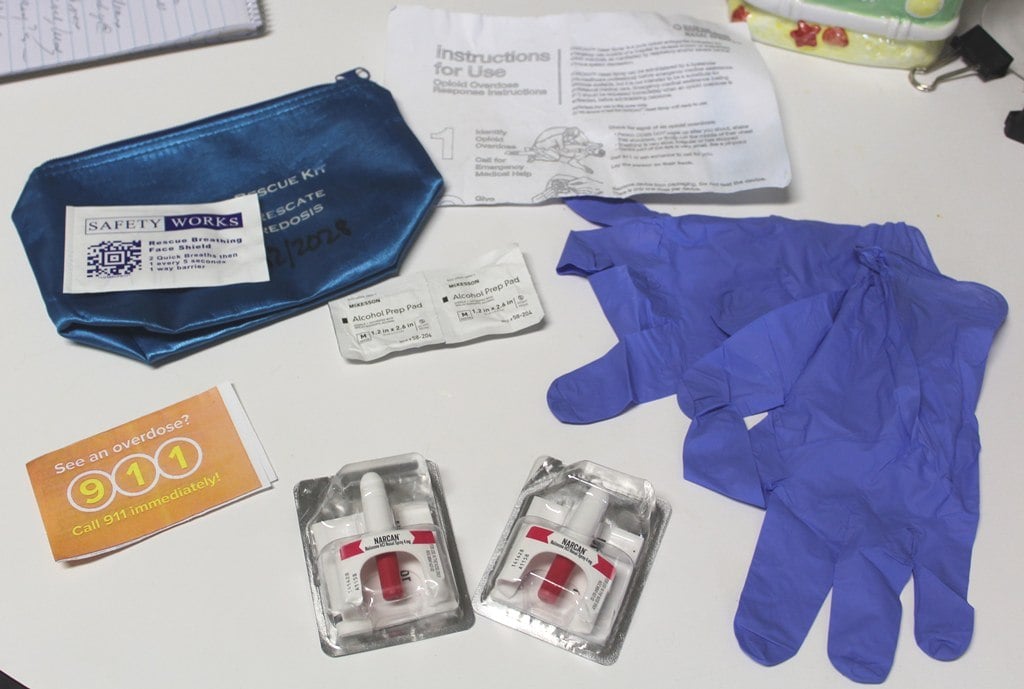
The Student Health and Counseling Center and the Alliance for Positive Health have teamed up to provide training for SUNY Plattsburgh students, faculty and staff in the use of Narcan (naloxone) to help stem the rising tide of overdose by fentanyl.
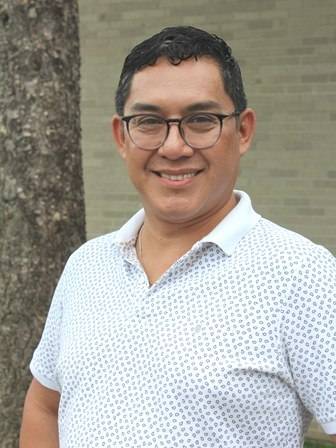 Marco Ayala-Perez, center administrator, said they began training on campus as a one-off
event four years ago, not long after his arrival at the university.
Marco Ayala-Perez, center administrator, said they began training on campus as a one-off
event four years ago, not long after his arrival at the university.
“My then-assistant director of medicine Sue Sand and I were discussing what we could do that would benefit campus that we weren’t currently doing,” Ayala-Perez said. With the use of fentanyl among college-age men and women on the rise, he and Sand thought Narcan training would answer that question.
“We already had a relationship with the Alliance for Positive Health during the pandemic, so we reached back out to them to do our first training,” Ayala-Perez said. That first training saw 40-50 participants learn how to administer the nasal spray that helps save lives. Open to students, faculty and staff, alliance personnel came to campus, performed the training and distributed free Narcan kits.
‘More Common’
“We learned a few things from that first, stand-alone training, like when you mention ‘Narcan,’ people get nervous,” Ayala-Perez said. “But it was important for parents, faculty and staff to realize that we live in a society where the use of drugs is more common than we like to think. It’s better to provide the tools and training for how to do things safely.”
According to the New York State Office of Addiction Services and Supports, opioids — especially fentanyl and other synthetic opioids — are the most common substance involved in drug overdose deaths in the state.
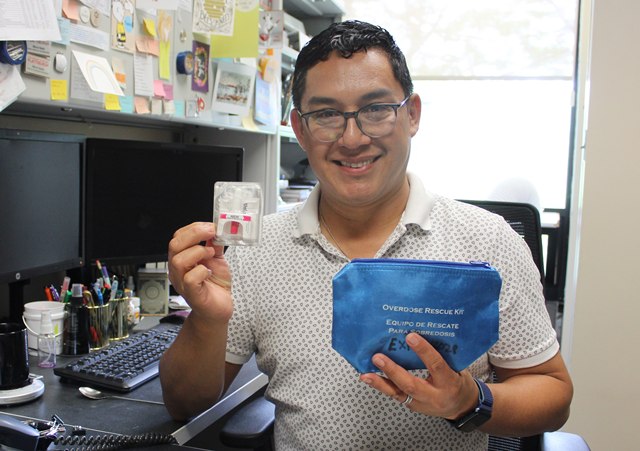 “Our mission is not only to keep students healthy but to also keep them safe,” Ayala-Perez
said. “Over the four years that I’ve been here, the students I’ve talked to have shared
that they know of someone who struggles with substance abuse. We want to provide the
training so our students, faculty and staff know what to do if someone overdoses.”
“Our mission is not only to keep students healthy but to also keep them safe,” Ayala-Perez
said. “Over the four years that I’ve been here, the students I’ve talked to have shared
that they know of someone who struggles with substance abuse. We want to provide the
training so our students, faculty and staff know what to do if someone overdoses.”
He said that with a fentanyl overdose, “you’re out. It’s a matter of minutes, and there is a limited window to administer Narcan.”
The Center for Disease Control has said that fentanyl is “up to 50 times stronger than heroin and 100 times stronger than morphine.” Unlike fentanyl used by medical personnel to treat severe pain, the illicit drug is often mixed with other drugs like heroin, cocaine and methamphetamine. As little as two milligrams can be fatal.
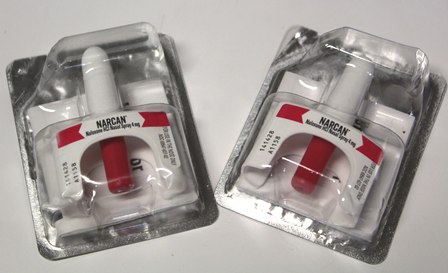 Ayala-Perez said that Narcan won’t hurt someone if administered to someone who is
not experiencing a fentanyl overdose, “but it will definitely help save a life if
it is,” he said. “That’s why it’s important to have (Narcan) with you. Keep it in
your bag. I carry a kit in my computer bag because you just never know.”
Ayala-Perez said that Narcan won’t hurt someone if administered to someone who is
not experiencing a fentanyl overdose, “but it will definitely help save a life if
it is,” he said. “That’s why it’s important to have (Narcan) with you. Keep it in
your bag. I carry a kit in my computer bag because you just never know.”
With the success of the first training, Ayala-Perez said they decided to bring the event to Wellness Week, held annually during February, and again in the fall. Attendance has steadily increased over time with the most recent training this past spring topping 70 participants.
And for the first time ever, the university and the Alliance for Positive Health are teaming up again to offer training to the more than 130 Education Opportunity Program students who are on campus through Aug. 7 during the EOP Summer Academy.
“It’s a great opportunity for us as a way to connect with all those students, to let them know the resources we have here at the health center and about the outreach the alliance is doing,” he said. “But it’s also great to have that many more people on campus trained — students who will know what to do in case of an overdose.
“Knowledge is power, and we will have powerful students who not only recognize an emergency but will have the tools to assist,” he said.
For more information, contact Ayala-Perez at 518-564-2183 or email [email protected].
— Story, Photos by Associate Director of Communications Gerianne Downs