‘We Were Here’ Film Breathes Life into History of Black Africans in Renaissance Europe
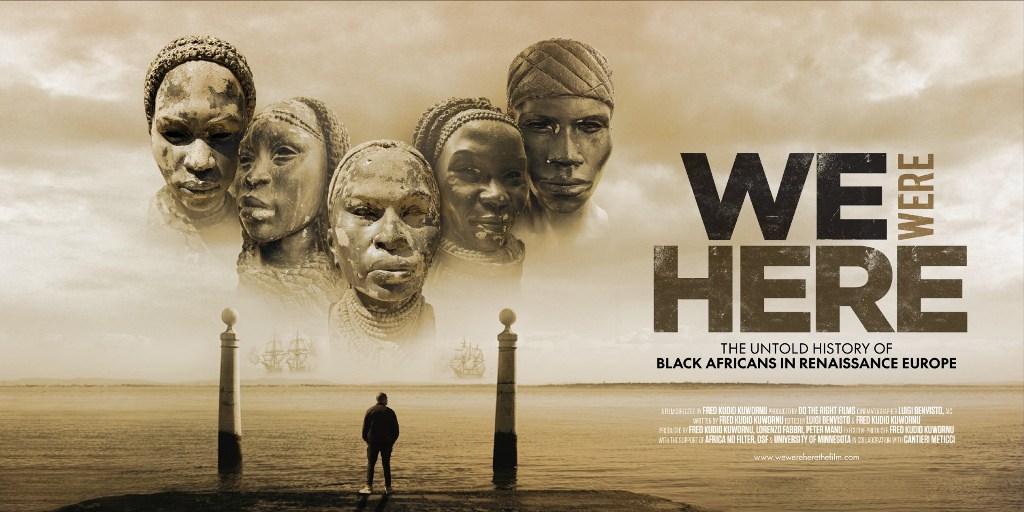
SUNY Plattsburgh will play host to a screening of the film, “We Were Here: The Untold History of Black Africans in Renaissance Europe,” along with a talk-back session with director Fred Kudjo Kuwornu, Thursday, April 2 at 6 p.m. in Krinovitz Recital Hall, Hawkins Hall.
Kuwornu, a New York-based Afro-Italian, and U.S. artist, filmmaker, curator and scholar, was born in Europe and has said that throughout his school years, he never saw himself reflected in history lessons.
“The only mention of Black people came in the context of the slave trade, and when we studied the Renaissance, there were no stories or images of African descent in our textbooks,” he said.
 Kuwornu said those discussions of Blacks in the fourteen and fifteen hundreds “typically
focus solely on their condition as enslaved individuals, overlooking the remarkable
figures who lived in Europe during that time.”
Kuwornu said those discussions of Blacks in the fourteen and fifteen hundreds “typically
focus solely on their condition as enslaved individuals, overlooking the remarkable
figures who lived in Europe during that time.”
‘Hidden Presence’
“We Were Here” looks at the “hidden presence of African and Black individuals in that time period through the art by Renaissance masters, including Diego Velazquez, Vittore Carpaccio, Andrea Mantegna and others. The film spans the United Kingdom, Italy, Spain, Portugal, the Netherlands and France, re-enacting the masterpieces to bring life the subjects of the paintings.
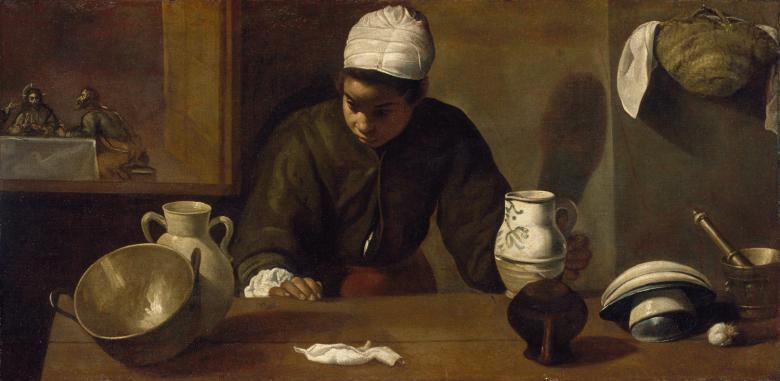
Paintings like “The Kitchen Maid” by Velazquez and “Portrait of an African Slave Woman” by Annibale Carracci are given life, begging the question: “If the Black faces portrayed in these Renaissance masterpieces could speak, what would they tell us?”
 “This film aims to empower the Black diaspora by highlighting their presence as an
integral part of Renaissance Europe’s societal fabric,” Kuwornu said. “It seeks to
address the gaps in our historical education and challenge the narrow narrative that
has long shaped our understanding of this period.”
“This film aims to empower the Black diaspora by highlighting their presence as an
integral part of Renaissance Europe’s societal fabric,” Kuwornu said. “It seeks to
address the gaps in our historical education and challenge the narrow narrative that
has long shaped our understanding of this period.”
‘Truly Wonderful Opportunity’
According to Tonya Cribb, director of the Plattsburgh State Art Museum, the film company — Do the Right Films, a nod to Spike Lee’s 1989 film, “Do the Right Thing” — originally sent “We Were Here” to Meg Pearson, dean of arts and sciences, “who forwarded it along to me,” Cribb said.
“After reading the biography and watching the film short, I felt like this would be a truly wonderful opportunity for our students,” she said. From there it was shared with Dr. Michaela Rife, assistant professor of art history in the art and design department, and Dr. Lauren Eastwood, sociology professor and chair of the art department.
Cribb wanted to see it the film and talk-back with Kuwornu could be an entry into the department’s Visual Artist Lecture Series.
“I wanted to see if they thought other departments would like to co-sponsor (an event),” she said. She reached out to Chris Chamars, coordinator of multicultural initiatives in the Office of Diversity, Equity and Inclusions. “A program of this nature was a natural fit in support of their initiatives and the Plattsburgh Next Strategic Plan, prioritizing opportunities for equity and inclusion on campus.”
She arranged a screening and visit.
‘Perfect Fit’
As current faculty organizer for the Visual Artist Series, Rife said “it seemed like the perfect fit for this series,” she said.
“The Venice Biennale, where the film was exhibited, is like the Olympics of the contemporary art world, so this is not only an amazing opportunity for our students but the entire Plattsburgh community,” Rife said. “The subject — highlighting Black Africans in Renaissance Europe — is fascinating and so important in the work of correcting the often-whitewashed histories of early modern Europe.
“While I incorporate some of this material in my art history courses, I’m excited for students to see history come alive through Kuwornu’s film,” she said.
For more information, contact Cribb at 518-564-2474 or email [email protected], or Rife at 518-564-2461 or email [email protected].
— By Associate Director of Communications Gerianne Downs with Photos Provided