Mobile Museum of Tolerance, Other Holocaust Remembrance Events Planned
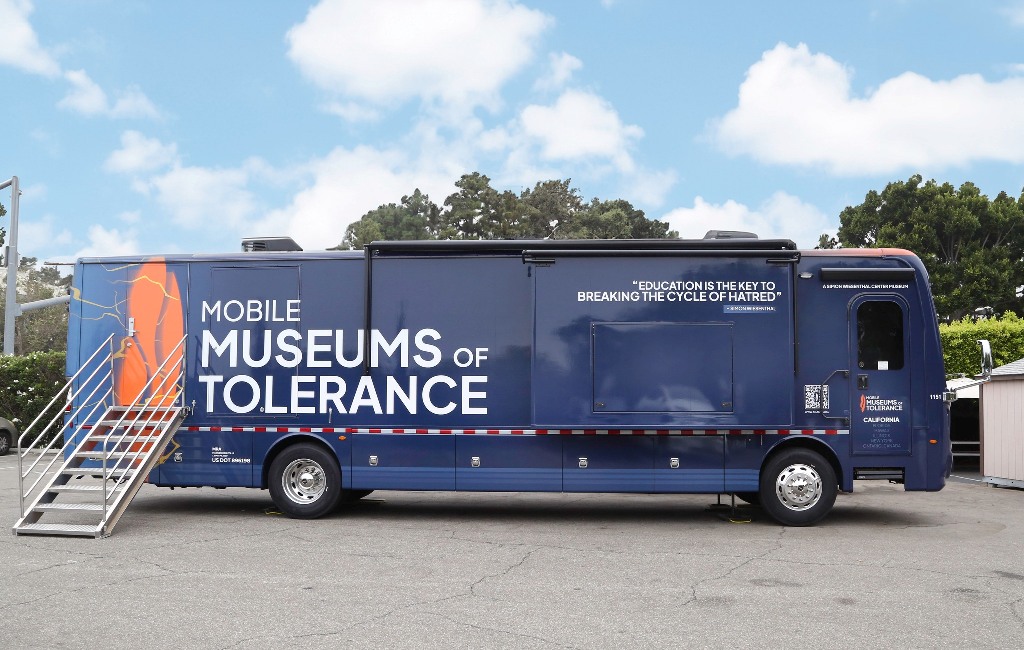
SUNY Plattsburgh will soon play host to a traveling human rights education center that features an interactive program using the lessons of history to confront bigotry, antisemitism and hate.
The Mobile Museum of Tolerance, a Simon Wiesenthal Center initiative, brings workshops on the Holocaust, civil rights and digital media literacy to schools in five states. This museum on wheels will be stationed on the Amite Plaza April 13-14, allowing faculty, staff and students from both SUNY Plattsburgh and Clinton Community College and surrounding school districts the opportunity to bear witness to the atrocities of the Holocaust and other genocides as they explore those themes of tolerance.
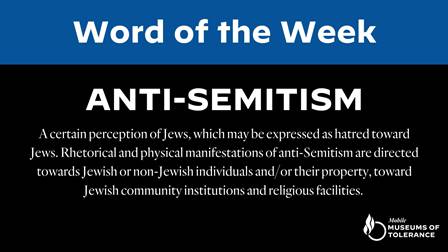 Simon Wiesenthal was an Austrian Holocaust survivor who dedicated his life to ensuring
that the crimes of the Nazi regime were not forgotten and that those responsible were
brought to justice. According to the Museum of Tolerance, Wiesenthal’s work “symbolized
a moral obligation to memory — reminding the world of the dangers of hatred, antisemitism,
and indifference.”
Simon Wiesenthal was an Austrian Holocaust survivor who dedicated his life to ensuring
that the crimes of the Nazi regime were not forgotten and that those responsible were
brought to justice. According to the Museum of Tolerance, Wiesenthal’s work “symbolized
a moral obligation to memory — reminding the world of the dangers of hatred, antisemitism,
and indifference.”
The mobile museum helps remind the academic communities it visits of that work. Workshops include civil rights, digital media literacy to combat hate, “The Anne Frank Story,” and “The Power of Ordinary People,” among other programming.
First Colleges Visited by MMOT
“We are honored to be among the first two college campuses selected to host this specially tailored experience, which has been crafted for our academic community,” said Dr. Alexander Enyedi, SUNY Plattsburgh president. “The program features powerful content, including interviews with Holocaust survivors and survivors of other genocides, and provides structured, immersive learning sessions for students.”
 SUNY Plattsburgh and Clinton Community will avail itself of the programming on April
13 while it will be available to local school districts on April 14.
SUNY Plattsburgh and Clinton Community will avail itself of the programming on April
13 while it will be available to local school districts on April 14.
For more information on the mobile museum visit, contact Chris Chamars, coordinator for multicultural initiatives in the Office of Diversity, Equity and Inclusion and SUNY Plattsburgh liaison for the project, at 518-564-5417 or email [email protected].
The visit by the Mobile Museum of Tolerance coincides with the campus’ Days of Remembrance, SUNY Plattsburgh's annual commemoration of the Holocaust that includes events such as a keynote speaker and ceremony in the Douglas and Evelyn Skopp Holocaust Memorial Gallery in Feinberg Library.
‘Terribly Close’ Curator to Speak
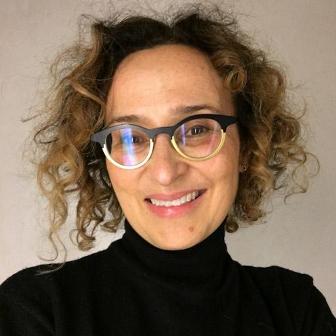 This year’s events begin Monday at 1 p.m. in the Skopp Gallery with “Terribly Close: Polish Vernacular Artists Face the Holocaust,” a lecture by Dr. Erica Lehrer, professor of history and director of the Curating
and Public Scholarship Lab at Concordia University, Montreal, whose work on the exhibit
of the same name ran from Dec. 1, 2018 to March 31, 2019 at The Ethnographic Museum
in Krakow, Poland.
This year’s events begin Monday at 1 p.m. in the Skopp Gallery with “Terribly Close: Polish Vernacular Artists Face the Holocaust,” a lecture by Dr. Erica Lehrer, professor of history and director of the Curating
and Public Scholarship Lab at Concordia University, Montreal, whose work on the exhibit
of the same name ran from Dec. 1, 2018 to March 31, 2019 at The Ethnographic Museum
in Krakow, Poland.
A cultural anthropologist and museologist, Lehrer is internationally known in scholarly efforts to reimagine the role of the museum in public life. She directs “Thinking Through the Museum: A Partnership Approach to Curating Difficult Knowledge in Public,” a seven-year, $2.5 million international team project funded by the Canadian Social Sciences and Humanities Research Council.
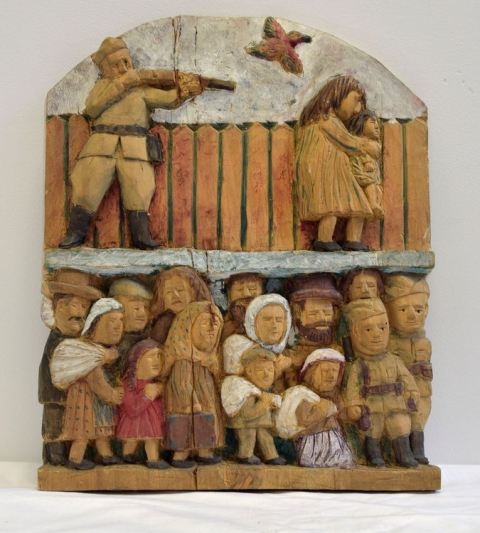 Lehrer will discuss the folk art made by non-professional Polish artists — many of
them village laborers — documenting the German Nazi occupation of Poland and the Holocaust.
Made largely in the 1960s and ‘70s, these objects are at times deeply moving, at other
times grotesque — often disturbing for the ways they impose idioms on Jewish suffering
or upend accepted roles of victim, perpetrator and bystander.
Lehrer will discuss the folk art made by non-professional Polish artists — many of
them village laborers — documenting the German Nazi occupation of Poland and the Holocaust.
Made largely in the 1960s and ‘70s, these objects are at times deeply moving, at other
times grotesque — often disturbing for the ways they impose idioms on Jewish suffering
or upend accepted roles of victim, perpetrator and bystander.
Meet and Greet
From 2 to 2:30 p.m. in the 3rd floor reading lounge, students, faculty, staff and community members are invited to join Lehrer for refreshments and informal discussion.
The Days of Remembrance ceremony will be held 4 p.m. Tuesday, April 14 in the Skopp Gallery with keynote speaker Dr. Christopher Kirkey, director of the Center for the Study of Canada, who will discuss his research on the different forces that shaped German actions during the course of the Final Solution.
Speakers will also include Dr. Robert Harsh, Educational Opportunity Program counselor emeritus, Dr. Andrew Buckser, director of Jewish studies and professor of anthropology, and Rabbi David Joslin of Temple Beth Israel.
All Days of Remembrance events are free and open to students, faculty, staff, and members of the Plattsburgh community. For more information on the Days of Remembrance, contact Buckser at 518-564-3047 or email [email protected].
‘Return to Auschwitz’ Screening
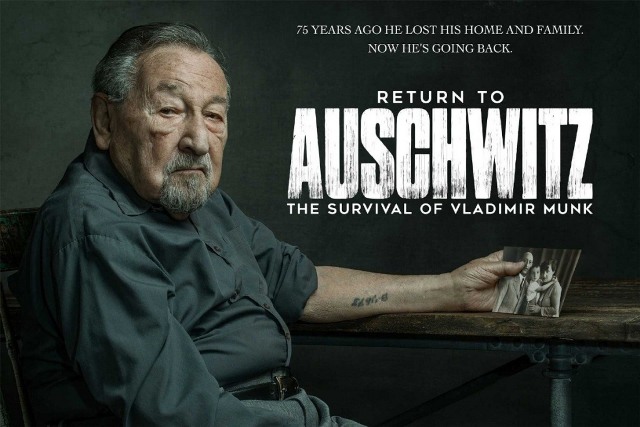 Also on April 13 at 3 p.m. in Yokum Lecture Hall Room 208, filmmaker Paul Frederick
and SUNY Plattsburgh’s Bruce Carlin, television studio engineer and technical coordinator,
will screen “Return to Auschwitz,” which tells the story of Professor Emeritus Vladimir
Munk, a Holocaust survivor who taught biochemistry at SUNY Plattsburgh for more than
two decades. Munk’s life and legacy reflect the enduring power of education, resilience,
and community. The screening will be followed by a discussion with Frederick and Carlin.
Also on April 13 at 3 p.m. in Yokum Lecture Hall Room 208, filmmaker Paul Frederick
and SUNY Plattsburgh’s Bruce Carlin, television studio engineer and technical coordinator,
will screen “Return to Auschwitz,” which tells the story of Professor Emeritus Vladimir
Munk, a Holocaust survivor who taught biochemistry at SUNY Plattsburgh for more than
two decades. Munk’s life and legacy reflect the enduring power of education, resilience,
and community. The screening will be followed by a discussion with Frederick and Carlin.
And this Wednesday, April 8 at 3:30 p.m., Stuart Brody, Institute for Ethics in Public Life senior scholar, will discuss “Talking and Writing about the Holocaust” in Hawkins Hall Room 233. Brody will look at the issues confronted when we discuss or write about the Holocaust — made more difficult in part because of the cultural and political differences between Israeli Jews and American Jews.
Though conventional wisdom may present a picture of identity between Jews of the United States and those of Israel, the culture is vastly different starting with the immediacy of the Holocaust in the lives of Israeli vs. American Jews. The discussion will explore this and a variety of cultural differences that yield cleavages in the two populations even though they ultimately are tied together.
The Ethics Institute series is free and open to the public in person or via Zoom at https://plattsburgh.zoom.us/j/85001085346.
— Story by Associate Director of Communications Gerianne Downs with Photos Provided