Chancellor King Launches First-Generation Ambassador Program During SUNY Plattsburgh Forum
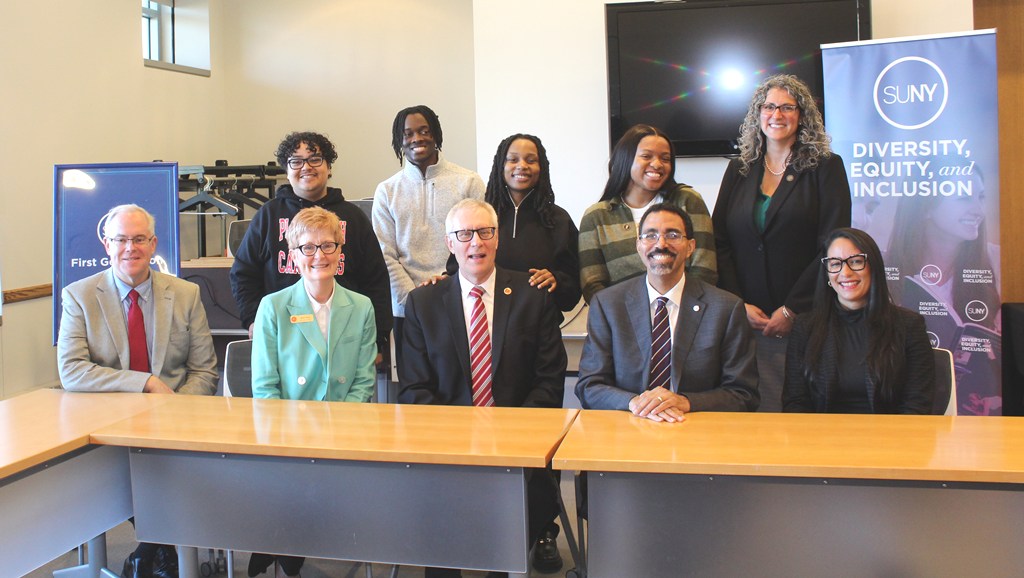
State University of New York Chancellor John King announced SUNY’s new First-Generation Ambassador Program at SUNY Plattsburgh Nov. 18 during a roundtable discussion with several of the university’s first-generation students.
King and SUNY Plattsburgh President Alexander Enyedi co-hosted the noon-time discussion where the students shared experiences unique to those whose families for whatever reason never pursued a college degree. Through the ambassador program, returning first-generation students will be selected to serve as liaisons in support of fellow first-generation students and work to expand resources on their campuses.
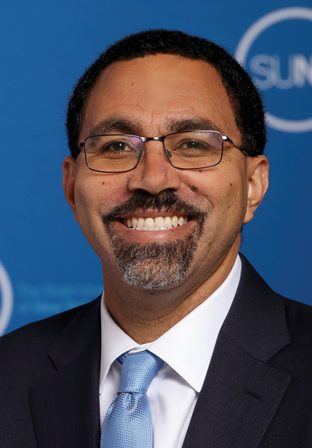 King called the program “a testament to SUNY’s commitment to ensuring students from
all backgrounds feel a sense of belonging and receive the resources they need to thrive.”
“Through initiatives like the First-Generation Ambassador Program, we are able to help students develop leadership skills and ensure everyone, including first-generation college students, is able to thrive and achieve upward mobility through an excellent higher education,” he said.
Six-month Leadership Initiative
The six-month leadership and career-readiness initiative is designed to empower first-generation college students by leveraging their strengths, resilience and cultural wealth to become civic and professional leaders, according to Lourdes Thebaud, director of student development at SUNY Systems Administration.
“Through mentorship, professional development workshops, networking opportunities, service-learning projects and engagement with the National Association of Colleges and Employers career competencies, ambassadors gain the skills and social capital needed for workforce success,” she said.
Thebaud said the ambassadors will receive a $1,500 stipend “and conclude the program by showcasing their campus impact and leadership achievements,” she said.
King was in Plattsburgh to preside over the inauguration later that day of Clinton Community College President Kennith Knelly and wanted to spend the afternoon meeting with students and faculty. Prior to the first-generation panel discussion, he met with faculty members to discuss artificial intelligence issues they are experiencing.
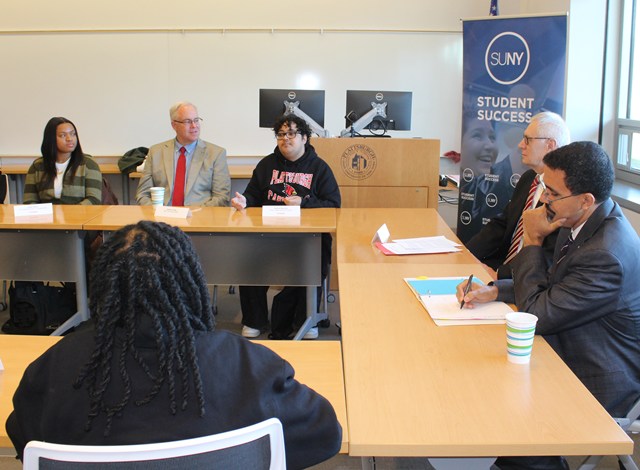 Enyedi opened the noon-time discussion by welcoming the panelists as well as the couple
dozen faculty, staff, lawmakers and administration in the audience of Hermes Conference
Room in Au Sable Hall. He told the students that serving all New York state residents
is what SUNY is about and making their dreams come true is what SUNY Plattsburgh is
about.
“As a first-generation college student myself, I know how much determination it takes to navigate an unfamiliar environment and how much of a difference the right guidance and support can make,” he said. “I was fortunate to have faculty, staff and fellow students who helped me find my way, but I also remember how much I had to figure out on my own.”
Anny Nelzy, senior biological sciences major from Brooklyn, gave credit for her academic success at SUNY Plattsburgh to the staff in the Advancing Completion through Engagement program and TRIO Student Support Services, from helping her set up a Google calendar to manage her time to their interest in her as a person.
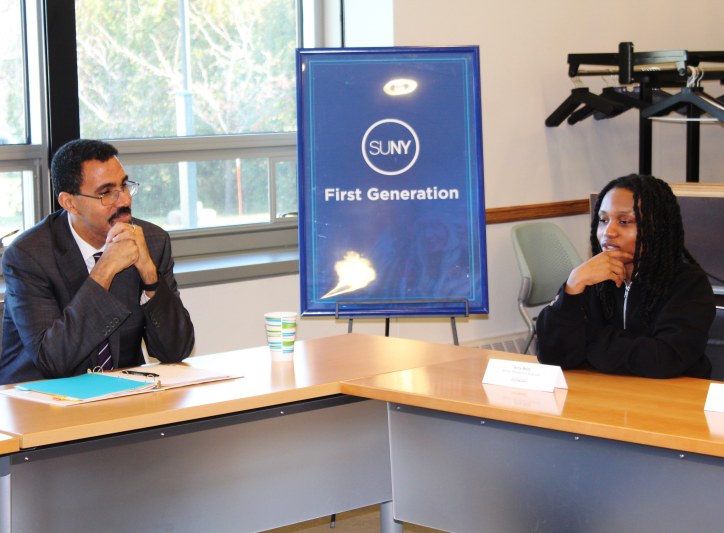 “They care all about balance in your life,” she said. “I discovered that you don’t
have to sacrifice what makes you happy. Where I came from, college is not a right,
it’s a privilege, and I don’t take that for granted. I learned that it’s OK to ask
for help. ACE and TRIO have been amazing by being there for me both academically and
personally.”
Joshua Severino, a senior digital media production major from New York City, agreed, giving TRIO and the ACE staff a shout-out for guiding him on his path to success as a future Cardinal.
‘Helped Me So Much’
“They’ve helped me so much and made me believe that I’m going to be OK,” he said. Like Nelzy, Severino said he came from a Caribbean household, where “everything has to be perfect. I always knew I would go to college. It wasn’t a question — it was going to happen. I must be doing something right.”
Enyedi asked the student panelists what advice they’d give to students who aren’t sure if higher ed is for them.
Nelzy said her advice is to visit schools, mentioning the spring overnight bus trips that coincide with open house events and are sponsored by the Office of Admissions.
“The bus trip, and having the costs covered, was a huge help for me,” she said. “That showed me that they really care. It played a huge part in me choosing SUNY Plattsburgh. But also, students need to look at all their options — do they have the programs you’re interested in; do they have services you’ll need. Coming here helped broaden my horizons and allowed me to slow down the pace.”
Enyedi asked the two grad students on the panel how resilience and leadership came into play in their college careers. Jayda Harris, a master’s student in the clinical mental health counseling program from St. Albans, Vt., said was “so grateful to be able to go from undergrad to graduate, but I had to battle the resiliency part of that,” she said.
Grateful for Opportunities
“But as an undergrad here, I opened up to joining a lot of clubs; I’m grateful for all these opportunities, but I wouldn’t have them if I had not gone to college,” Harris said.
Kalvin Smith, a master’s student in data analytics from the Bronx, said that SUNY Plattsburgh helped him develop resilience over time.
“It taught me to forget the small things and to pay attention to what matters,” Smith said. He said he pays attention to his academics, yes, but he also holds down a job, participates in extra-curricular endeavors and joined a fraternity.
“All these things helped build resilience,” he said. “I learned I am a student first, but I’ve also learned how to have a work/life balance. Managing different priorities has strengthened how I go about my day to day.”
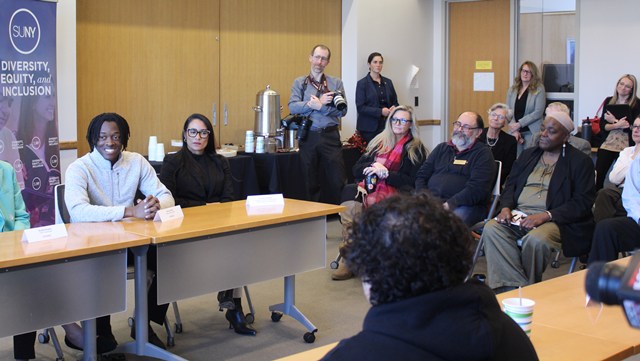 Thebaud, who also identifies as first-generation, said it’s always been her viewpoint
that “as you’re moving up the ladder, one hand is reaching down to bring someone else
up.”
Harris concurred.
“I always want to give back, to help students give back and be that voice for people who don’t have a voice,” he said. “It’s hard to think about — you have to do extra things to get to where you want to be.”
As she looks ahead to her career in clinical mental health, Harris said she now knows where she wants to be.
“I want to help people who are incarcerated,” she said. “I can be (that) voice.”
“It’s a journey and a process,” Nelzy said. “I want to talk to people who are just starting their journey. That’s what the ACE program is for me — someone there to guide me and just be there for me.”
Alison Webbinaro, Gov. Kathy Hochul’s regional representative for the North Country, said she loves coming to campus “to see first-hand how decisions made at the state level are working.”
“I feel really encouraged to see proof that these programs work,” she said. “I’m grateful you’re willing to come here and share.”
— Story, Photos by Associate Director of Communications Gerianne Downs