Title IX Coordinator Strives to Change ‘Toxic Masculinity’ Label to that of ‘Aspirational Masculinity’
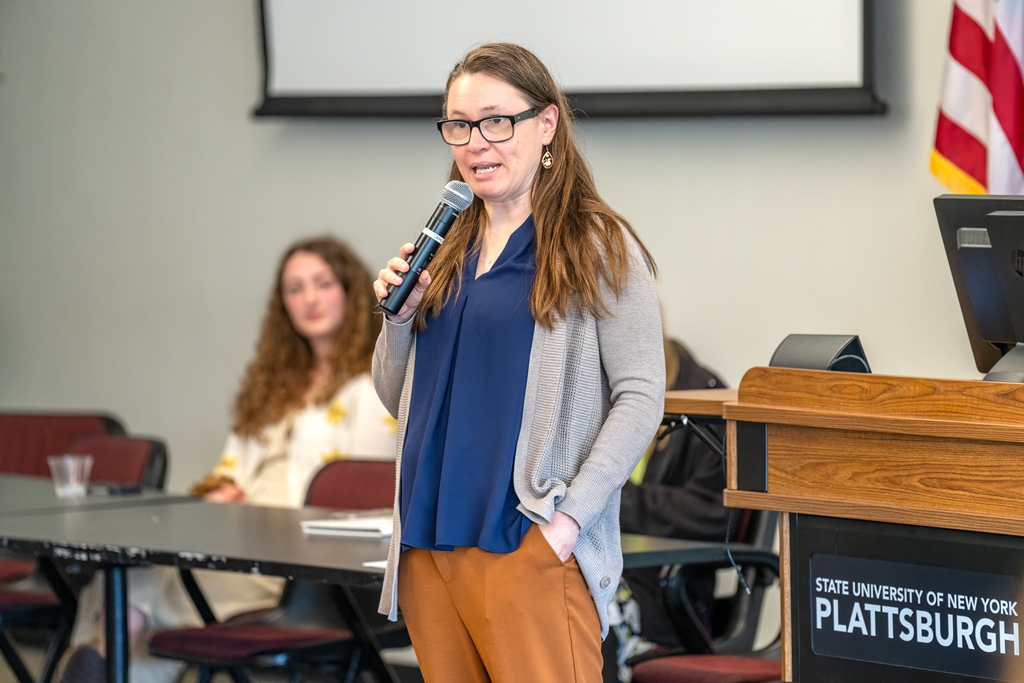
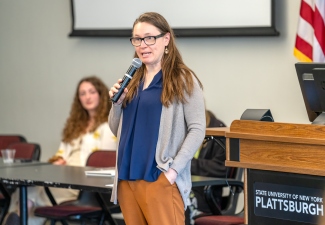
SUNY Plattsburgh’s Title IX/Title VI coordinator is working to get the message out that caring about and uplifting men and boys does not mean caring less about women and girls — it’s not either-or.
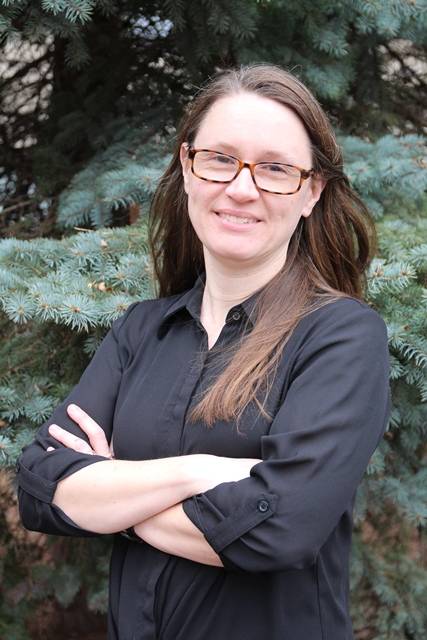
With the help of a working group launched last year, Kim Irland spearheaded her office’s Aspirational Masculinity Series, a monthly noontime gathering that aims to change the rhetoric surrounding what has become widely known as “toxic masculinity.”
Giving credit to Don McPherson, former college football standout-turned-motivational-speaker who coined the phrase, Irland said that “aspirational masculinity is about hope and promotion of wellness for boys and men in ways that uplift identity exploration, actives intentional conversations and invites everyone to reframe our understanding and refocus our supportive efforts.”
McPherson says that aspirational masculinity “is a positive shift away from traditional, restrictive gender norms and reactive gender violence prevention,” arguing that simply labeling masculinity as “toxic” fails to give boys and men a “constructive road map or a healthy identity alternative.”
Partnership Formed
Irland said her involvement in forming the aspiration masculinity working group derived from a partnership she began with Taj Ellis, senior counselor in the Educational Opportunity Program two years ago.
“Taj and I began to partner on healthy masculine initiatives programming when we both recognized the need to put our energy and visibility into having healthy dialogues with men on campus,” Irland said. “We wanted to change the rhetoric from ‘Here’s what not to do’ to ‘Here’s what to do instead.’”
In the same timeframe, the Gender-Based Violence Regional Council meeting was held in coordination with the Office for the Prevention of Gender Violence at SUNY Plattsburgh where Irland spoke about her and Ellis’ partnering on the fledgling aspirational masculinity working group. She said that the regional council was looking for campuses to partner with ASPIRE New York.
“It all aligned for us,” Irland said. “We hosted Don McPherson for two climate assessment dialogues. We had some conversations on aspirational masculinity, which really resonated with those who were there. It was inspirational for us to use that — to engage men and boys and help them to focus on their mental health.”
Fourth Friday Series
Irland and the committee worked to get the message to students in the residence halls through their “Bring it Home” campaign last spring as well as the successful Fourth Friday aspirational masculinity discussion series held during the lunch hour, originally aimed at employees to give them space to talk about masculine issues, Irland said.
The first Fourth Friday session, “Black masculinity,” was held last February during Black History Month. In March, the group discussed men and compliments, she said.
“We unpacked giving or receiving them along with some of the thoughts, feelings and perceptions, societal norms and gender expectation,” Irland said.
April, which is Sexual Assault Awareness Month, saw the series tackle men, mental health and trauma, Irland said. Other topics for the summer included men and sports, men and online behavior, and an open session where participants discussed whatever they felt comfortable talking about, Irland said.
Although the idea for the Aspirational Masculinity Series was at first devised to be for men and male-presenting employees, Irland said it has since been opened to all interested employees and students.
“It’s not about roles at the university but our role as humans,” Irland said. “This wasn’t intended to be professional development and training. It’s meant to be a personal journey of discovery.”
 This semester, Irland said they wanted to take a deeper dive into mental and physical
health. September’s Fourth Friday looked at “men’s fitness and the pressures on them
to have a certain body type,” Irland said. “We talked about body dysmorphia as well
bodybuilding and shortcuts men may be tempted to try.”
The rest of the semester’s sessions included gambling — issues with which were discussed during a casino night co-hosted by the Aspirational Masculinity Working Group and the Interfraternity Council; panel discussions on men and physical fitness, and men and maintaining a healthy lifestyle; and the Nov. 19 session — renamed Third Thursday because of Thanksgiving Break — will include a discussion on International Men’s Day. Third Thursday will be held noon to 1 p.m. by the Flynt Commons fireplace.
Irland said the intention of aspirational masculinity isn’t to undo the gains made by Title IX, which was signed into law by then-President Richard Nixon June 23, 1972, thereby prohibiting sex-based discrimination in any school or educational program that receives federal funding.
“The unintended consequence of removing barriers for women and girls is that men have been de-emphasized to the point of being underserviced in terms of an identity group,” she said. “If we believe in gender equality, it can’t be at the cost of the other. In this case, many men are feeling underrepresented through a lack of services that are mindful of masculinity.
“Men who have value in our society are more productive, better workers, better people,” she said. “I don’t believe the success and removal of barriers from one group should intentionally lead to barriers for another. All genders deserve services, support and access.”
Richard Reeves, author of the book, “Of Boys and Men,” argues that boys “are not performing as well academically as girls (with women outperforming men in various academic and professional domains), which can affect their future opportunities and contribute to their overall sense of frustration.”
Black Men Particularly Hard-hit
Additionally, Reeves says these challenges “have particularly hit Black men the hardest, as years of higher incarceration rates among Black men have severely limited their prospects in life. Similarly, men without college degrees have experienced declining wages, notable drops in life expectancy, and increased rates of family disruption.”
“The documentary, ‘Gone Guys,’ based on Reeves’ work, is a great introduction into why we’re doing this in the first place,” Irland said. “There is a lot of evidence that boys and men are struggling with mental health. Suicide rates are astronomically higher. In family life, men are struggling to feel valued.”
‘Nice Job Outlining Issues’
“Gone Guys” does a nice job outlining those issues, Irland said. The university has unlimited screening rights to the film, and Irland encourages faculty and staff to take advantage and host screenings.
Ultimately, “we need to change the way we talk about masculinity,” Irland said. “Reeves doesn’t advocate redoing our investment in girls. He’s saying we can do both. And it isn’t just for people who identify as male. The film’s intent is to invite everyone to the table. And remember, the work isn’t done for women and girls, either.”
For more information on the Aspirational Masculinity Series, working group or hosting a screening of “Gone Guys,” contact Irland at the Title IX/Title VI office at 518-564-3281 or email [email protected].
— By Associate Director of Communications Gerianne Downs; File Photos