Pulitzer Prize-Winning Author Elizabeth Kolbert to Give First Casella Sustainability Lecture
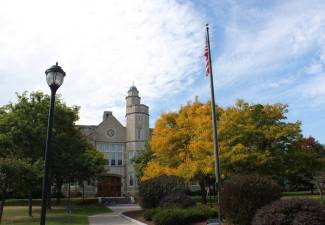
New Yorker Magazine staff writer and science reporter Elizabeth Kolbert will be on the SUNY Plattsburgh campus for a discussion on how, her Pulitzer Prize-winning book, “The Sixth Extinction,” is still relevant 10 years after its publication Friday, Oct. 23 at 7 p.m. in 200 Yokum Lecture Hall.
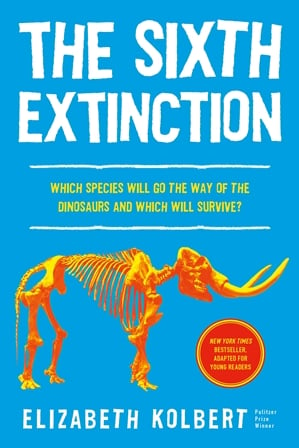 Kolbert is a two-time National Magazine Award winner and recipient of the Blake-Dodd
Prize from the American Academy of Arts and Letters for her work at the New Yorker.
The author of “Field Notes from a Catastrophe: Man, Nature and Climate Change” wrote
“The Sixth Extinction” as a scientific cautionary tale. In it, Kolbert reported how
65 million years ago, a mass extinction took out dinosaurs and three-quarters of the
species on Earth. A decade ago, scientists feared another extinction event was underway.
“The message I wanted people to take away from "The Sixth Extinction," and still want them to take away 10 years later, is that today one species, which, of course, is our own, has become the dominant force on planet Earth,” Kolbert said. “And that species is changing the world in ways that are having all sorts of unfortunate effects, one of which is the loss of many, many other species.”
Inaugural Casella Sustainability Lecture Series
Kolbert, the inaugural speaker in the Casella Waste Systems Environmental Sustainability Lecture Series, said her talk is aimed at a general audience given that she usually writes for The New Yorker, “which is a general interest magazine — one of the few still standing, I would add. Another (reason) is that I don't have any specialized knowledge — I'm not a climate scientist or an ecologist or a botanist — so really I can only write for a general audience, a group of which I am a member,” she said.
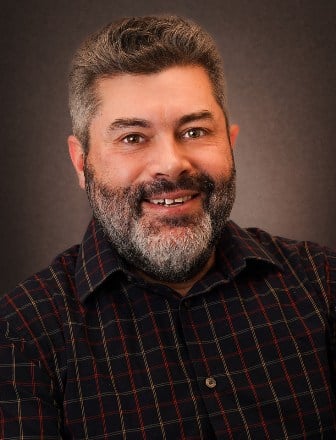 Dr. Mark Lesser, professor in the Center for Earth and Environmental Science and organizer
of the center’s weekly CEES Seminar Series, said he was appreciative of the “very
generous gift from Casella, which has allowed us to create the lecture as an annual
special talk within the weekly CEES Seminar Series.
The $50,000 Casella gift, along with additional support from the Plattsburgh College Foundation Grant and Sally Webb Endowment, among other sources, gives the university the opportunity to bring to campus a nationally recognized leader in environmental sustainability each year through 2030.
“For this lecture, we wanted to make sure we had a speaker who appealed to not just the university community, but to the regional community as well, and Elizabeth Kolbert's writing does just that,” Lesser said. "She is an internationally acclaimed Pulitzer Prize-winning author, and her writing on environmental issues in her novels, the New Yorker, and other magazines and journals speaks to the general public and the scientific community in a powerful and meaningful way.”
Lesser said he wrote to Kolbert’s agent, “and absolutely delighted when she agreed to come to Plattsburgh to speak," he said. He said it’s not just because her writing speaks to climate change and the other environmental issues that plague the planet.
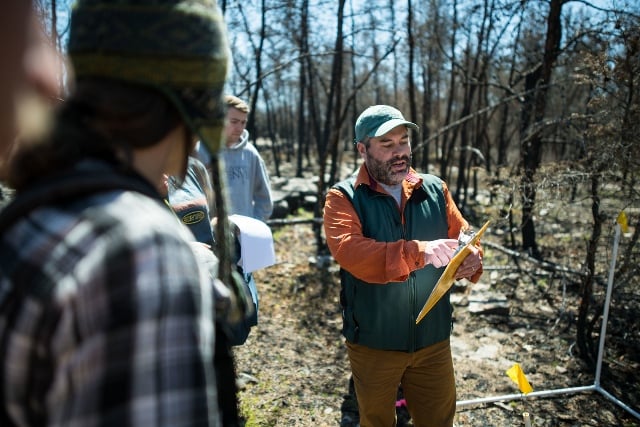 “She also finds and conveys the hope for solving these problems,” he said. “She visits
with scientists around the world who are working on these problems and makes their
work relatable to a general audience. I think this is a vital message for our students
— that the world is filled with people who are trying to make a difference, but what
Kolbert does is not only bring these efforts to light; she goes beyond the amazing
research being done and humanizes these amazing scientists in a way that I think allows
our students to realize this could be them some day.”
“I think the same is true for the general public. We are all much more open to changing the way we do things, or what we believe, when we can directly relate to the problem — here in Plattsburgh a good way to make someone more receptive to talking about climate change is to talk about how often Lake Champlain freezes over, and then we can talk about the science behind that. Kolbert does exactly that, but all around the world,” he said.
Scientists ‘Speak a Different Language’
“If scientists were better communicators, there probably wouldn't be a need for science journalists,” Kolbert said. “It's hard for scientists to speak to the general public. I don't think it's that they are unclear or lack empathy, though. I think they just speak a different language — let's call it ‘scientese.’”
She said the way to begin is by using the sort of language people use in everyday conversations.
“For instance, science is conducted using the metric system — degrees Celsius, liters, meters, etc. Americans don't think in the metric system. We think in degrees Fahrenheit, gallons, yards. So that's one place to start. I often describe myself as a translator. I am trying to translate ‘scientese’ for the general public. I think scientists have trouble even understanding what people don't understand.
”But if you look at scientific papers, they are not written for a lay audience. They are written for other scientists, and generally only people who already have a very deep knowledge of the field can understand them,” Kolbert said. “And that's how you advance in science, by writing that sort of paper. So really scientists need to know how to write in two languages, and that's tough.”
Elizabeth Kolbert’s appearance as part of the Casella Waste Systems Environmental Sustainability Lecture Series is free and open to the public. For more information, contact Lesser at 518-564-4139 or email [email protected].
— By Associate Director of Communications Gerianne Downs; File Photos