Learning Center Offers All SUNY Plattsburgh Students Academic, Tutoring Support
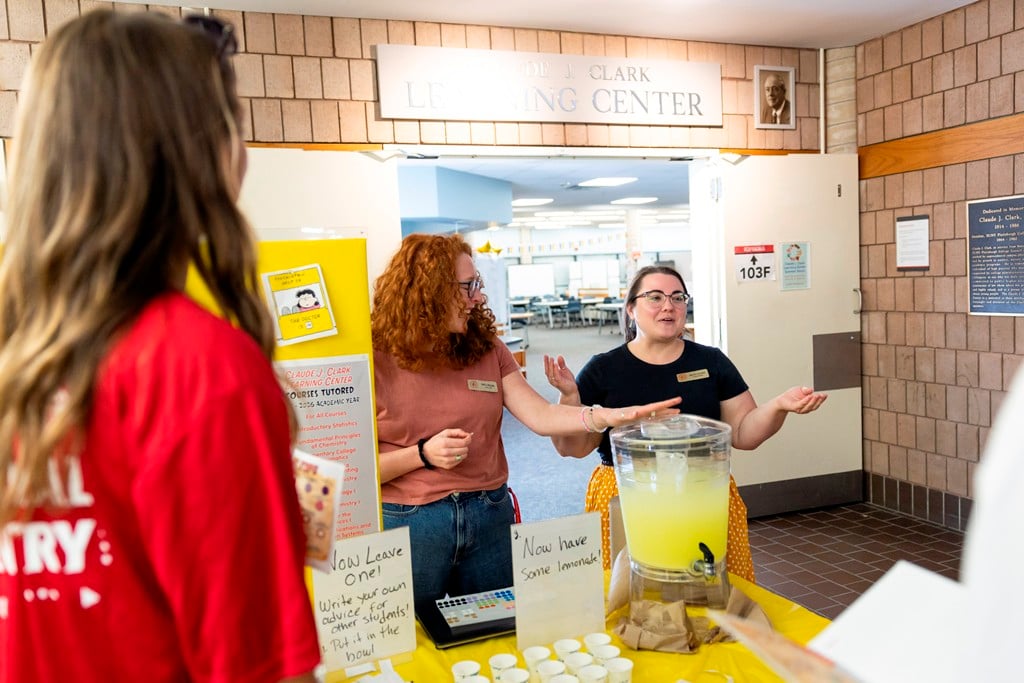
Tucked in the corner on Feinberg Library’s first floor is a place that lends a hand to those in over their heads.
The Claude J. Clark Learning Center has made the difference in students’ academic lives since opening more than 35 years ago. And for its staff, making a difference isn’t just what they do, it’s what they love.
“It comes down to the fact that we can see firsthand the difference we make every day,” said Karin Killough, who has served as Learning Center director since August 1999. “We know that every interaction with our students makes a difference. Taking time to check in and say hello (by students) isn’t a distraction from our work. It is our work.”
Established in fall 1989, the center on the first floor of Feinberg Library is a space designed to support all students with free peer and professional tutoring in an array of subjects such as accounting, biology, chemistry, math and writing, as well as academic personal training to help build study skills so students can stay on track, according to Regan Levitte, assistant director and writing specialist.
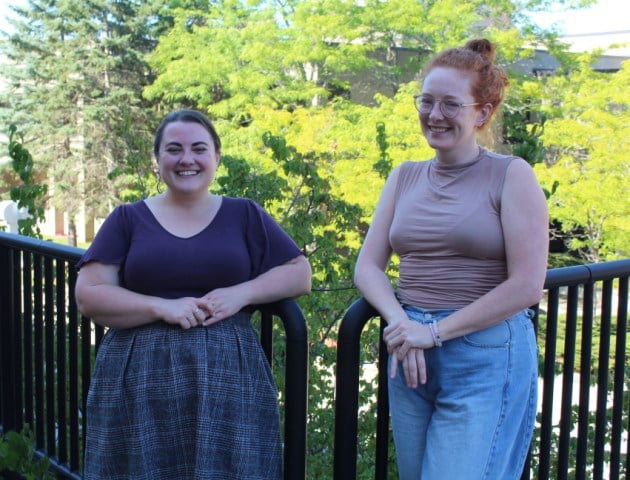 “Our first mission is academic support. We’re a center designed to be close to the
faculty and sometimes, we are the faculty,” Levitte said. “I know from research I
conducted at grad school that when faculty get to know and trust and endorse the services
here, it plays a big part in getting students through our doors.”
In addition to managing the writing tutors, Levitte teaches the ENG 390 elective course, “Writing Tutor Theories and Practice,” required for those who want to work as writing tutors. Additionally, she also works one-on-one with students who may be struggling with writing or, conversely, highly specialized graduate students, some of whom may be working on graduate school application documents, she said.
Joining Levitte is Erica Miller, English language support specialist who teaches and designs the English as a second language curriculum.
“I teach classes that cater to the international students who need support as first-year students,” Miller said.
Said she hopes one day to change the culture of ESL to be more of an English for academic use, which she sees as more useful to not only international students but for many other students as well.
“There are domestic students who would benefit from a focus on academic English usage,” she said. “It’s my hope that one day, these classes are open to everyone. Students enroll in my classes even though they don’t have to. They often come to see me after the first semester to tell me they found it helpful.”
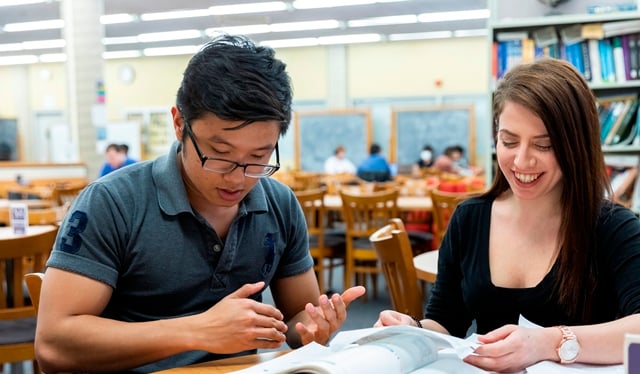 Miller said that it’s not just a class of basic words.
“I taught a one-credit intercultural communication course that had a lot of domestic students enrolled,” she said. “It’s really cool to have conversations with people from other countries. That’s huge, seeing them improve and develop confidence. And for the ESL students, the No. 1 thing they want to get out of this is to make friends.
“There’s a language barrier, a cultural barrier and what they tell me is, ‘I’d like to make friends. How do I do that?’ Even our domestic students feel that,” Miller said.
Levitte said the Learning Center “is a place that brings us all together. That’s why it’s important that Erica’s program is here: We’re for everybody. Her program is designed to give international students targeted support that they need,” she said. “It is meant to be the scaffolding they need to be a part of the general student population.”
Center Ambassadors
Classroom visits have become an important part of the Learning Center’s offerings, the idea for which Levitte brought with her from the University of Nebraska. This program took off so well, the center launched its Learning Center Ambassadors program four years ago, Levitte said.
Ambassadors are tutors who have been promoted, she said.
“They have to be responsible and dedicated employees who like presenting to others,” she said. “Most go with me on classroom visits, but some do go alone on select presentations, mostly doing our general overviews and one for college foundation seminar sections called ‘Adjusting to College.’”
Visits, which average about 35 each semester, range from presentations on the center to Levitte teaching “important writing skills, literature reviews, revising strategies, or peer review skills — the things that faculty “often feel the ‘shakiest’ about teaching,’” she said.
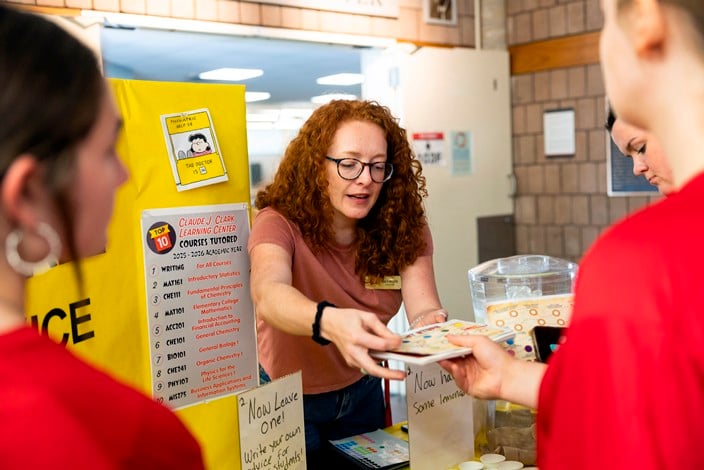 Night Against Procrastination
One of what Levitte calls one of the center’s “signature” events is the upcoming Long Night Against Procrastination: Finals Edition, being held Wednesday, Dec. 2 from 6 to 10 p.m. in the Learning Center and Feinberg Library.
The program started as a co-hosted event between the center and library, but “we have been working with the Accessibility Resources Office and the Educational Opportunity Program Student Association as well as having funding from a program grant through College Auxiliary Services and the Plattsburgh Alumni Services,” she said. “Last year, we had our biggest Long Night Against Procrastination with 65 participants. It’s been a really successful program that has a following of ‘regulars.’”
For more information on the Learning Center, it’s programs, or to schedule a classroom visit, call 518-564-2287, email [email protected] or visit https://www.plattsburgh.edu/academics/resources/learning-center/index.html.
— By Associate Director of Communications Gerianne Downs; File Photos