Anthropology Faculty Join UK Archaeologist to Research Health Effects of Industrial Revolution
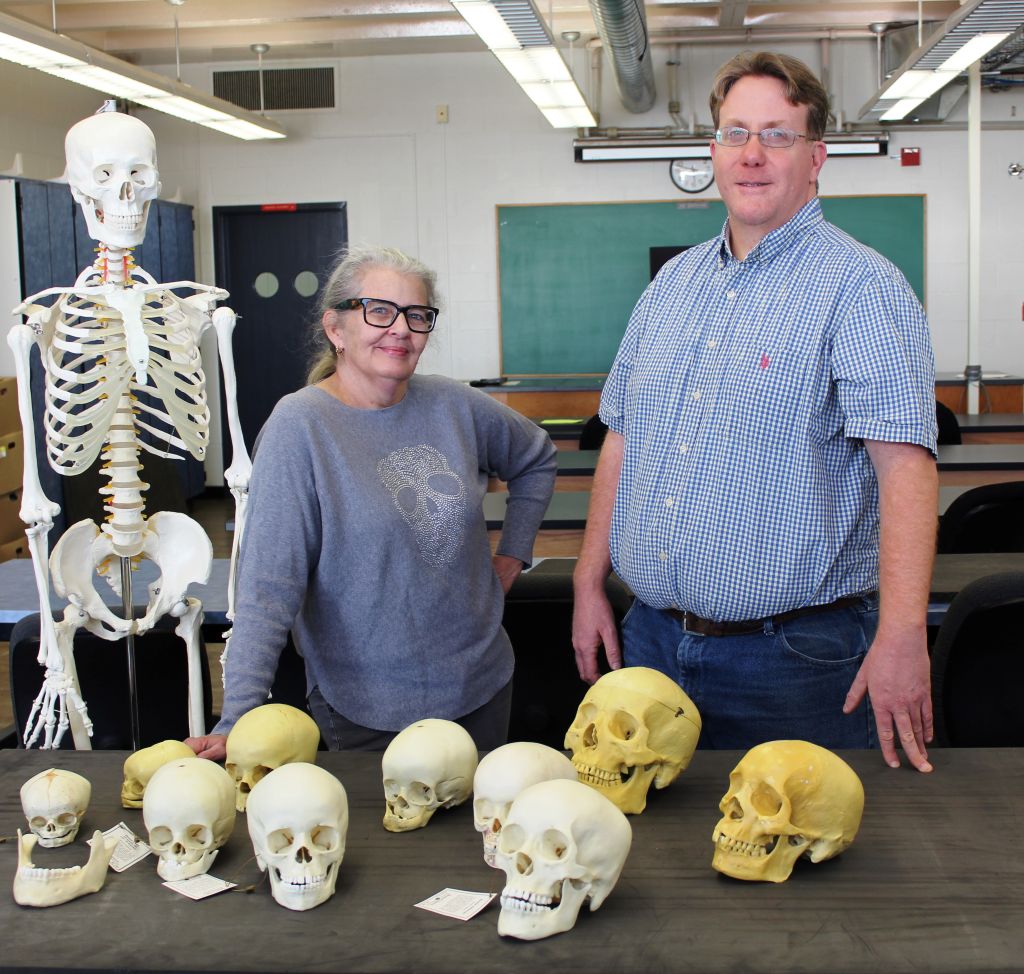 Two SUNY Plattsburgh faculty members are joining forces with a colleague in England
to explore how the Industrial Revolution contributed the health of those who lived
through it.
Two SUNY Plattsburgh faculty members are joining forces with a colleague in England
to explore how the Industrial Revolution contributed the health of those who lived
through it.
Dr. Justin Lowry, associate professor, and Dr. Gillian Crane-Kramer, associate professors in anthropology and lead researchers on this side of the Atlantic, along with Dr. Jo Buckberry, lead from Bradford’s School of Archaeological and Forensic Sciences in Bradford, United Kingdom, are launching the international project, “Dead and Buried: Investigating Changes in Health During the Industrial Revolution,” thanks to a $1.6 million research grant, with $270,000 U.S. dollars from the National Science Foundation and the remainder, about $1 million British pounds, from the UK’s Arts and Humanities Research Council.
Three-year project between SUNY Plattsburgh and the University of Bradford in Bradford, West Yorkshire, England, will combine bio-archaeological data from 20,000 human skeletal remains with historical records to explore mortality, chronic illnesses and the lived experience of people during the 18th and 19th centuries.
The impetus for the project came out of work that Crane-Kramer and Buckberry have been working on for years, and Lowry joined in through his own collaborations with Crane-Kramer.
“(Crane-Kramer) and I both teach introduction to human evolution,” Lowry said. “Subsequently, she and I have written a revision to the textbook for the same class — scheduled to be published in 2026.”
Lowry said Buckberry, here during one of her research trips in collaboration with Crane-Kramer, ended up “working on a geospatial analysis of bio-archaeological data, which set the ball in motion for adding the mapping component to this project, which is my bailiwick,” he said.
Detailed Understanding of Health
In addition to international collaboration, this project gives SUNY Plattsburgh researchers the opportunity to develop detailed understanding of health “at a crucial time in our history, when populations grew in size, individuals moved to towns and cities, and many processes became mechanized, giving rise to the landscape and buildings that shape Britain today,” Buckberry said in a statement from Bradford. “These changes, and public health acts that followed, had a profound and lasting effect on our wellbeing,” she said.
Crane-Kramer worked for three years with Buckberry on those health concerns on a grant from the Royal Society of London.
“That grant led to several refereed papers, a special edition in a prestigious journal, and several conference papers,” she said. “We had intended to extend the study to include the United States as well in our future work.”
Buckberry and Crane-Kramer are both archaeologists and biological anthropologists
with a specialty in paleopathology — the study of ancient disease — as well as paleonutrition
— study of ancient nutrition.
“I have also been interested for many years in how we could combine our knowledge
of past lives via skeletal analysis with informative contemporary documentary material,”
Crane-Kramer said.
Spanning 150 years from 1750 to 1900, the Industrial Revolution was the change from home-based production to factory manufacturing work. Beginning in the U.K., it eventually spread to other parts of the world, including the United States.
“The Industrial Revolution was a dramatic turning point in history, completely reshaping how we live,” Lowry said. “We often talk about the rise of factories, the invention of machines and the growth of cities. But one vital question remains largely unanswered: How did this massive upheaval impact the actual health of the people who lived through it?
Scattered Clues
“While we understand the huge consequences of industrialization — from rapid city growth and mechanized work to the beginning of climate change — we only have scattered clues about how these changes affected human health day to day,” he said.
“Our groundbreaking research aims to change that. We are launching a large-scale investigation in the UK and USA to create a clear, comprehensive picture of the ‘health landscape’ during this transformative era,” Lowry said.
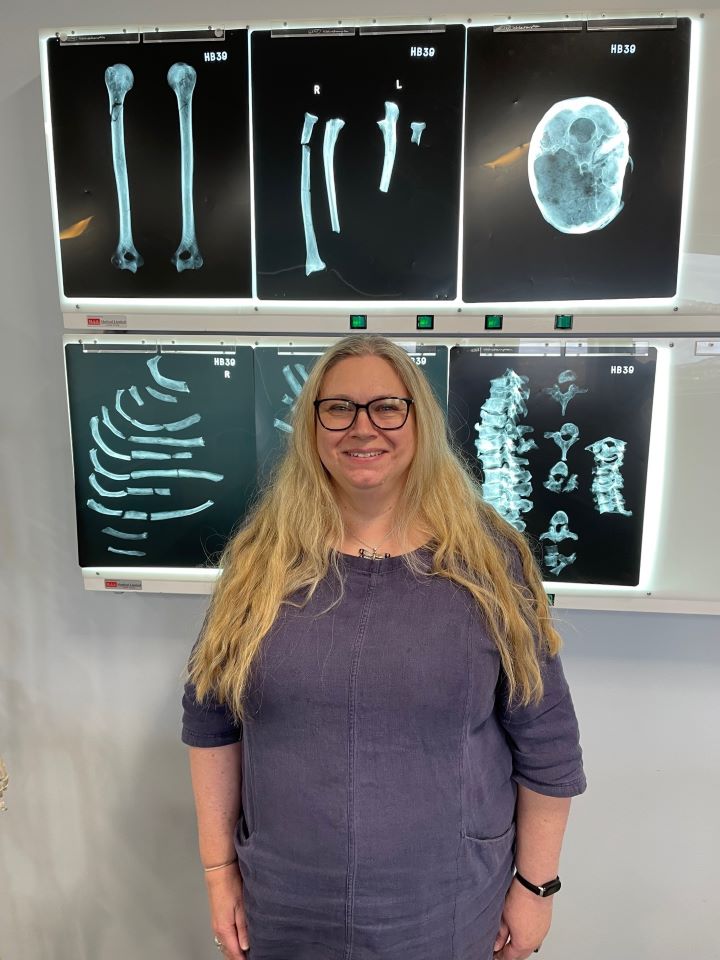 To solve this puzzle, Lowry, Crane-Kramer and Buckberry “are doing something unique:
We are merging two powerful sources of evidence: Human skeletal remains and documentary
evidence,” he said.
To solve this puzzle, Lowry, Crane-Kramer and Buckberry “are doing something unique:
We are merging two powerful sources of evidence: Human skeletal remains and documentary
evidence,” he said.
“By analyzing bones, we can uncover physical evidence of disease, trauma and overall health status, giving us deep insight into chronic conditions and the physical hardships people endured,” Lowry said. They will also use historical data — death certificates, census data and hospital registers — to investigate mortality rates, looking at who died and why and the risk factors for diseases such as cholera.
Pinpoint Risk Factors
“By weaving these two data streams within a spatial framework — mapping where people lived and worked — we can pinpoint specific risk factors for disease across different communities,” he said. “This research will move beyond simple snapshots to reveal, on a massive scale, the true cost of the Industrial Revolution on human health and longevity.”
Following on from their previous work on changes in health and the Industrial Revolution in England, Buckberry and Crane-Kramer “wanted to see if there were similarities and differences in the process between England and the United States given there is about a 70-year delay in the commencement of the Industrial Revolution between them,” Crane-Kramer said. “Did the Americans approach certain issues differently? Did they learn from British mistakes? Was the focus different?”
Creates Largest Database
The study will also use unpublished datasets from archaeological and census records to create the largest database of industrial-era health information to date.
“This is an especially crucial time for understanding human health,” Lowry said. “We want to really investigate the role of industrialization on the development of human morbidity in cities and urban environments. The take-aways from this grant are that research into the health impacts of industrialization is important, and our results will be important for understanding how public health programs should address those issues.”
“Dead and Buried” begins spring 2026 and will involve a “ramp up of research followed by a series of presentations and publications in the final semester of the project,” Lowry said. Research will take place in the United States in the summers and in the UK for the whole year.
“Gillian and I will be traveling to England to work with our colleagues there, and we will be managing student researchers here on campus.”
“I have been interested for a long time, in how health changes during periods of major cultural transition,” Crane-Kramer said. In 2007, she was co-editor of the book, “Ancient Health: Skeletal Indicators of Agricultural and Economic Intensification," which focused upon major changes in health trends with the transition from hunter/gathering to farming.
“This work with Jo Buckberry is an extension of this interest — looking at the health impacts of the Industrial Revolution (and) the creation of the modern world,” she said. “This is without question, one of the greatest cultural revolutions in the history of our species, and it has had in many ways, catastrophic health consequences.”
For more information, contact Crane-Kramer at [email protected] or call 518-564-5049, or Lowry at [email protected] or call 518-564-4005.
— By Associate Director of Communications Gerianne Downs